Laser-cut canopies work well for tropical homes because they filter sunlight without fully closing the area. With the right pattern, the shadows on floors and walls become part of the spatial experience.
In 2026, many canopy designs use simpler patterns so they are easier to maintain and do not look too busy under strong sunlight.
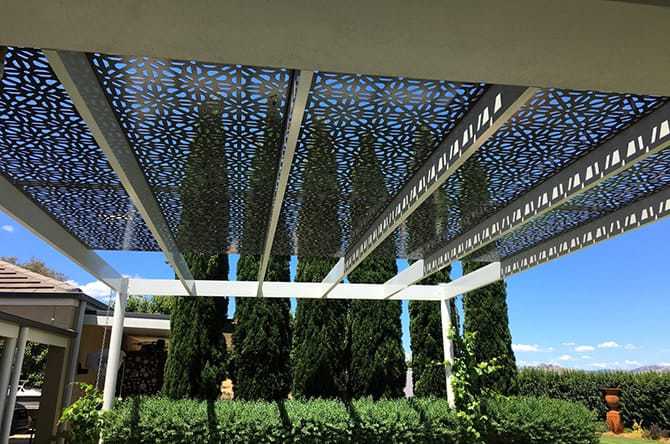
What To Consider Before Making A Canopy
Outdoor canopies should consider sun direction, rainwater flow, frame strength, and anti-rust finishing. Patterns that are too small can trap dirt more easily.
- Sun direction
- Slope and drainage
- Material thickness
- Outdoor finishing
- Maintenance access
A good canopy does not only block heat; it also makes the entrance area feel more alive.
Study Sun Direction Before Choosing A Pattern
A canopy for a tropical home should start with one simple observation: where does the sun come from, when is the space hottest, and which part of the house needs protection? A west-facing house often receives stronger afternoon heat than a north or south-facing one. If the pattern is too open, too much light still enters. If it is too dense, the area below may feel dark and heat can be trapped.
Laser cutting allows the pattern density to be controlled. Areas that need stronger protection can use a denser layout, while areas that only need a visual accent can use larger openings. This makes the canopy more than an extra roof. It becomes part of the building’s climate response.
Shadows As Part Of The Design
One of the most attractive qualities of a laser-cut canopy is the shadow it creates. In the morning or late afternoon, the pattern can fall across floors, walls, plants, or entrance paths. This effect works especially well for terraces, carports, semi-outdoor seating areas, and villa entrances.
Still, a shadow that looks beautiful in a reference image may not always be comfortable in daily use. Very small motifs can make the shadow feel busy, especially on textured floors. Minimalist homes usually work better with larger and cleaner patterns. Villas or tropical homes can use leaf, wave, or organic motifs as long as the scale remains controlled.
Frame Strength And Slope Are Essential
A canopy sits outside, so structure matters. Laser-cut panels need a strong frame so they do not bend, vibrate, or shift under wind. Material thickness, panel span, and frame spacing should match the installation location. A clean design still needs proper engineering behind it.
The slope of the canopy also needs planning so rainwater can flow properly. A canopy that is too flat may hold water, dust, leaves, and dirt. If the pattern contains many small openings, dirt can get trapped more easily. A lightweight visual appearance should not ignore drainage and maintenance.
Outdoor Materials And Finishes
Canopy material should be selected according to site conditions. For partly protected areas, material options can be more flexible. For areas exposed to direct rain, outdoor finishing becomes necessary. Powder coating is often chosen because it creates a clean and consistent color, but it still needs basic care.
Homes near the coast or in very humid areas need more careful material discussion. Salt air, wind, and rain can accelerate corrosion if the specification is not suitable. In those conditions, owners should not ask only about color. They should also ask about surface protection and recommended maintenance.
Matching The Canopy With The House Style
A laser-cut canopy looks best when it follows the language of the house. Modern tropical homes usually work well with simple geometry, simplified leaf motifs, or repeated patterns with enough breathing space. Homes with wood and natural stone can use bronze, matte black, or dark brown finishes. White minimalist homes often use black panels for stronger contrast.
For carports, avoid patterns that are too complicated because the surface is large and often seen from the street. For smaller terraces, more personal details can work because people see them at a closer distance. Scale is important so the canopy does not feel like an ornament forced onto the building.
Maintenance Should Be Easy In Real Life
A good canopy should be easy to maintain without special tools. Small and dense patterns can trap dust and leaves, especially near trees. Before choosing a motif, imagine how the owner will clean it. Can the surface be reached? Can water flow away? Are there corners where dirt will collect?
Regular cleaning with water and a soft cloth is usually enough for basic care. Joints, bolts, and frame areas should be checked from time to time, especially after heavy rain or strong wind. Consistent light maintenance is much better than waiting until the finish looks tired or damaged.
Conclusion For 2026 Canopy Design
Laser-cut canopy trends in 2026 are moving toward patterns that are functional, cleaner, and easier to maintain. A good design does not only make the house look different. It helps control heat, sunlight, shade, and comfort in semi-outdoor areas.
Start with sun direction, room use, frame strength, and rainwater flow. After that, choose the motif and finishing that fit the building. With the right planning, a laser-cut canopy can protect the home, create beautiful changing shadows, and give the facade a stronger identity without making it feel heavy.