In 2026, a fence is no longer treated only as a boundary. It becomes part of the facade, privacy control, airflow, lighting strategy, and overall visual character of the home.
Laser cutting allows patterns to be produced with precision and consistency. Homeowners can choose botanical motifs, geometric layouts, or custom designs that match modern tropical architecture.
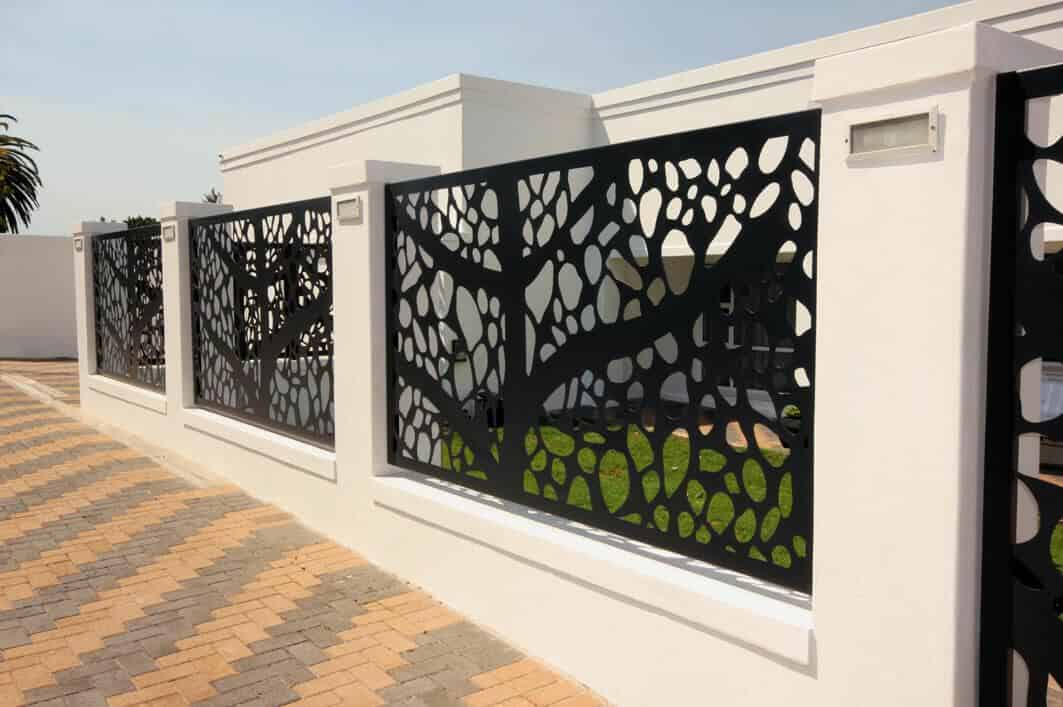
Organic And Botanical Motifs
Leaf, branch, and natural patterns remain strong in 2026 because they work well for tropical homes, villas, and residences that need a warmer feel.
This direction pairs well with landscaping, breeze blocks, natural stone, warm lighting, and dark or earth-tone finishes.
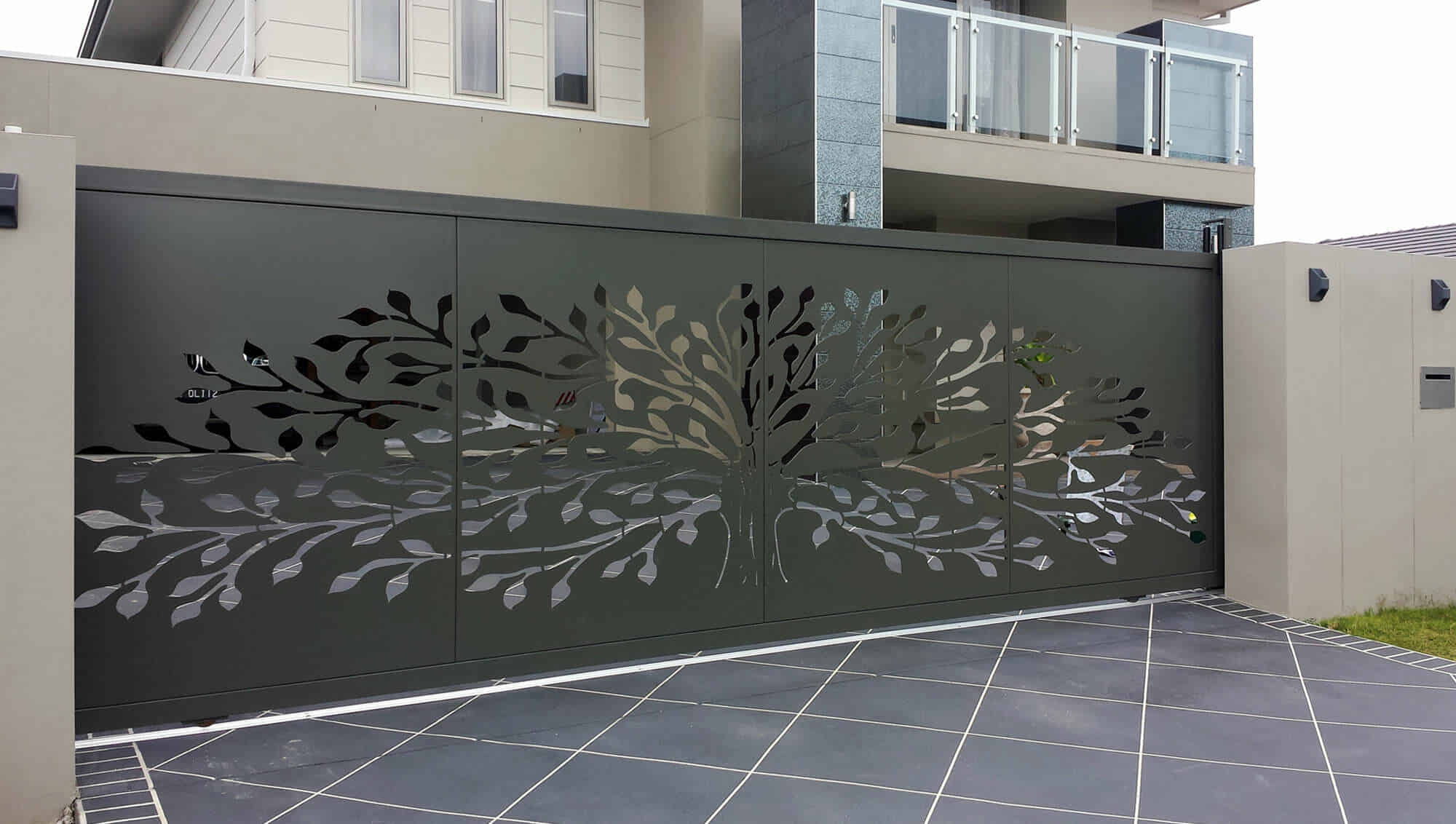
Modern Geometric Patterns
Diamond, diagonal, vertical, and repetitive patterns remain relevant because they create a modern, clean, and structured look.
- Leaf and botanical motifs
- Modern geometric patterns
- Local and abstract ornaments
- Minimalist panels with cleaner surfaces
For 2026 projects, start from the function you need: privacy, security, airflow, or facade aesthetics.
Start With The Level Of Privacy Needed
A good laser-cut fence is not only attractive. It has to answer the homeowner’s needs. A house on a busy street may need more privacy, while a home in a quiet residential cluster can use a more open pattern. The privacy level will influence motif density, fence height, and whether the laser-cut panels should be combined with solid surfaces.
If the owner still wants light and airflow, a medium opening ratio is often the safest choice. A pattern that is too dense can make the fence feel heavy and reduce ventilation. A pattern that is too open looks light but may not protect the front area enough. This balance should be discussed before the final motif is chosen.
Pattern Scale Should Match The Facade
A motif that looks good in a small drawing may not work on a fence several meters long. Scale is important. For large fences, very small details can look busy and tiring. For small fences, oversized motifs may lose detail and feel empty.
The safer approach is to preview the pattern based on the actual panel size. Repeated modules also need attention. If the motif is not designed to meet cleanly between panels, the pattern can look broken. In modern homes, neat alignment is often more valuable than excessive detail.
Combining Solid Panels And Laser Cutting
Not every part of a fence has to be perforated. Many strong designs combine laser-cut panels with solid metal, breeze blocks, hollow steel, timber, or low walls. This creates better visual rhythm and helps control which areas should be open or private.
For example, the area near the living room can be more private, while the garden side can use a more open pattern. The main gate can carry the signature motif, while side panels use a simpler version to control cost. This approach makes the fence feel designed rather than decorated.
Color And Night Lighting
A fence is visible both during the day and at night. During the day, color and pattern respond to sunlight. At night, garden lighting, wall lights, or lights behind the panel can change the character completely. A simple laser-cut motif can look dramatic when warm light passes through it.
Matte black remains popular because it is neutral and strong. Bronze, dark grey, and metallic brown can create a different personality. For tropical homes with planting, dark panels usually make greenery stand out. For minimalist white homes, dark laser-cut panels create a clear contrast.
Gates, Hinges, And Daily Movement
Fence design is not only about fixed panels. Gates, hinges, wheels, tracks, and opening systems must be planned. A pattern that is too dense or a material that is too heavy can affect daily use. Sliding gates need the right track and wheel system. Swing gates need strong hinges and posts.
The movement area should also be safe. Avoid sharp edges in places people touch often. If the home has children, the opening size and edge placement should be considered. A fence should look good, but it must also be comfortable and safe to use every day.
Custom Motifs For A Stronger Identity
One reason homeowners choose laser cutting is the ability to create custom motifs. A pattern can be inspired by leaves, architectural lines, local ornaments, or abstract forms. Custom does not have to mean complicated. In fact, motifs that are too personal or too detailed may age quickly if they are not simplified.
For a design that lasts visually, choose a strong basic form that is easy to read. Small details can be added carefully. In 2026, clean and proportional designs tend to feel more timeless than crowded patterns that only impress at first glance.
Conclusion For 2026 Fence Models
The best laser-cut fence model is the one that fits the house, not merely the trend. Start from privacy, security, panel size, viewing direction, and facade style. Then choose the motif, material, thickness, finish, and installation system that support those needs.
A successful fence makes the house look cleaner from the street, provides a safe boundary, allows airflow, and creates a recognizable visual identity. With thoughtful planning, laser cutting can turn a fence from a basic boundary into an important part of the home’s character.