Villas and hotels need memorable design. Laser cutting can be applied to facades, railings, signage, partitions, ceilings, and decorative panels to create a more distinctive guest experience.
In 2026, hospitality motifs tend to draw from local identity, tropical nature, and simple abstract patterns that remain elegant over time.
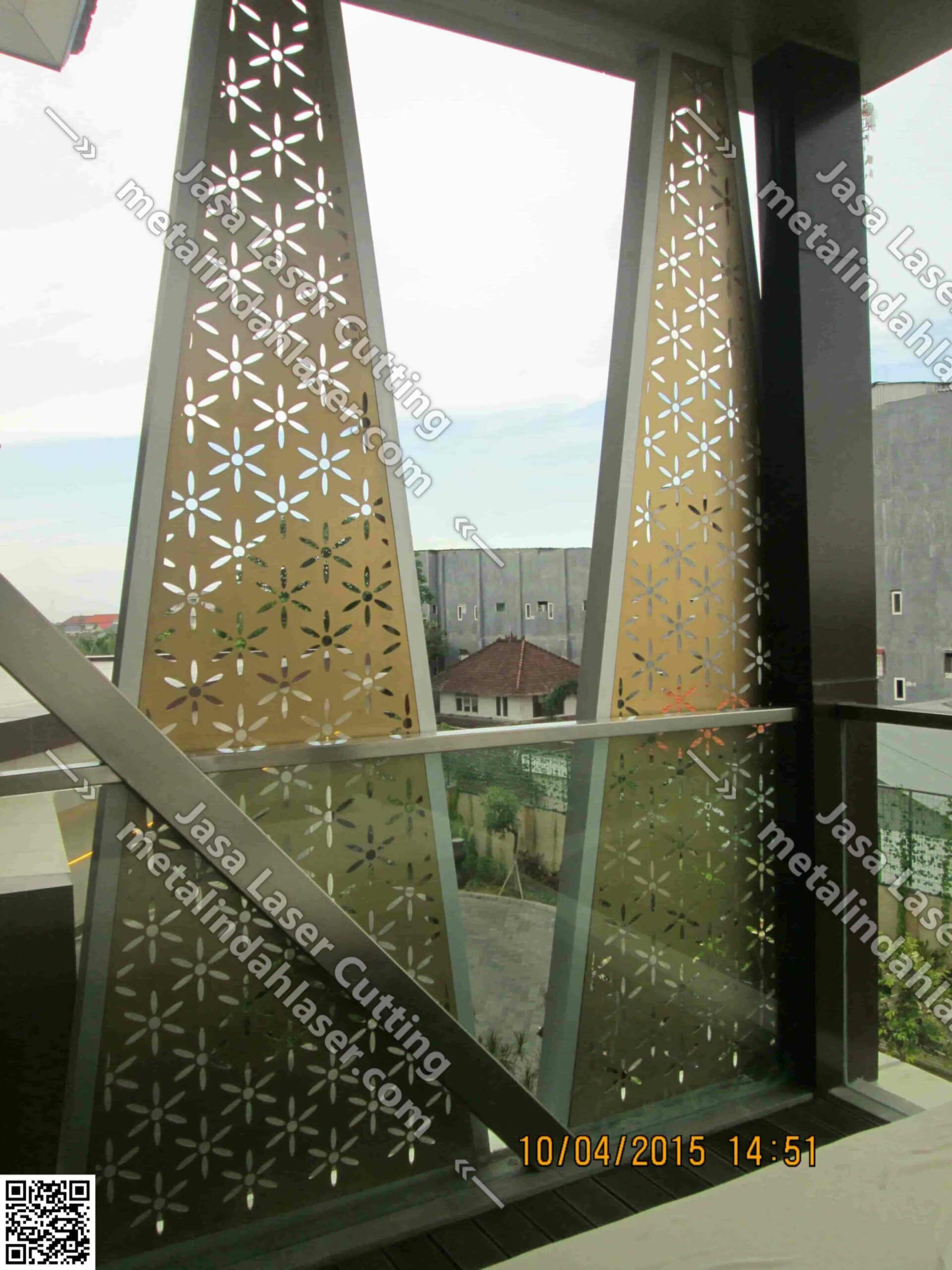
Most Effective Areas
Laser-cut motifs are most effective in areas guests see first or photograph often, such as front facades, lobbies, corridors, and entrance signage.
- Facades and screen cladding
- Lobby and reception
- Balcony railings
- Entrance signage
- Restaurant or lounge partitions
In hospitality projects, a good motif helps guests remember the place, not just notice decoration.
Design Starts With The Guest Journey
For villas and hotels, a laser-cut motif should not be chosen from a catalog in isolation. The design should begin with the guest journey: arriving from the street, seeing the signage, entering the lobby, walking through corridors, reaching the room, and using the restaurant or pool area. Each point has a different visual role. The entrance must be recognizable, the lobby should create a first impression, and corridors should feel comfortable rather than tiring.
Laser cutting can connect that journey. A main motif can appear on signage and the facade, then return in a calmer version on partitions or interior panels. This creates consistency without repeating the exact same pattern everywhere.
Local Inspiration Without Overdecorating
Hospitality projects often want a local identity. Tropical leaves, waves, woven patterns, stone textures, traditional architectural lines, or surrounding nature can all become references. The challenge is making these inspirations feel modern instead of overly literal. A motif that is too crowded can make a hotel feel themed in a way that ages quickly.
A safer approach is simplification. Take the rhythm, line, or proportion of the inspiration and turn it into a cleaner pattern. A leaf reference does not need to show every vein. It can become a silhouette, curve, or repeated flow. The result is more elegant and easier to combine with modern materials.
Photo Spots And Visual Memory
Guest experience is strongly shaped by visual moments. Many guests take photos at entrances, lobbies, restaurants, and corners with strong backgrounds. Laser-cut panels can create memorable backdrops without filling the room with heavy decoration. With the right lighting, the motif becomes more alive at night.
Still, photo areas should not sacrifice comfort. A lobby panel should be easy to clean, should not block circulation, and should not make the space feel smaller. If used as screen cladding, the pattern must consider heat and light. If used as a restaurant partition, the opening ratio should give enough privacy while keeping the atmosphere open.
Materials Must Support Daily Operations
Hotels and villas are used every day by many people. Materials and finishes need to handle touch, dust, humidity, and regular cleaning. A panel that looks beautiful on opening day may become difficult if the detail is too small or the surface is hard to reach.
Outdoor areas such as facades, signage, and balcony railings need finishes that match the weather. Indoor areas should use surfaces that do not easily show stains or scratches. Color choice matters too. Very light colors may show dirt in high-traffic areas, while very dark colors can show dust under strong lighting.
Different Motifs For Different Functions
Not every hotel area needs the same motif. A facade can use a larger pattern that is readable from a distance. A lobby can use a medium pattern with more detail. Corridors should usually feel calmer so guests do not feel visually overwhelmed. Restaurants or lounges can be more expressive because guests stay there longer and the mood is more relaxed.
This variation makes the design richer while still feeling controlled. The key is keeping a common thread: line direction, rhythm, color, or basic shape. With that connection, the variations do not feel random.
Signage As Part Of The Design Language
Signage for villas and hotels does more than show the name. It becomes part of the place identity. Laser-cut metal letters, logos, and backing panels can be integrated with the facade, garden, or entrance wall. At night, backlighting or soft spotlights can make the signage feel more premium.
Size should match reading distance. A roadside sign needs different scale and contrast from a lobby sign. Material should also match location. Outdoor signage must handle heat and rain, while indoor signage can focus more on detail and finish.
Conclusion For Hospitality Projects In 2026
Laser cutting motifs for villas and hotels in 2026 are becoming more refined: less crowded, more connected to identity, and easier to maintain. The best design is not the most complicated motif. It is the one that supports the guest experience from arrival to departure.
If a project is being planned, start from the story of the place, the architectural style, the target guest, and the most important visual areas. From there, the motif can become a facade, signage, partition, railing, or decorative panel that feels connected. Used this way, laser cutting becomes part of the hospitality experience, not just decoration.