Laser-cut decorative panels can become wall accents, backdrops, lobby features, or visual dividers. Compared with ordinary wall decoration, metal panels feel more solid and long-lasting.
For 2026, decorative panels tend to use more curated motifs that are not too crowded and work well with interior lighting.
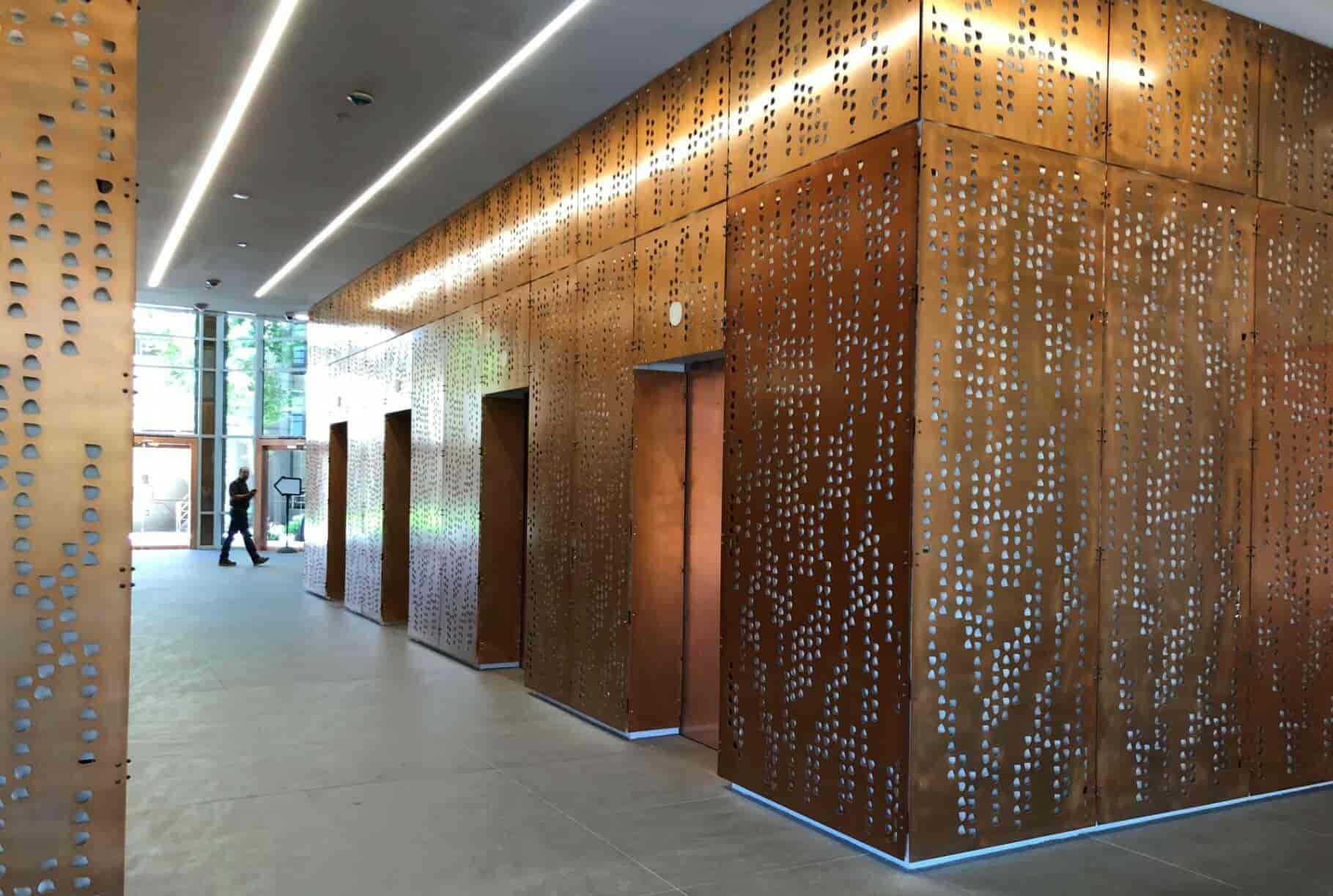
When Should Decorative Panels Be Used?
Decorative panels are ideal for empty walls that need a focal point. They also work for hotels, restaurants, and villas that need a signature accent without changing the building structure.
- Living room backdrop
- Lobby wall
- Stair area
- Reception backdrop
- Bedroom or villa accent
The right decorative panel makes a room feel complete without becoming excessive.
Choose The Wall That Deserves Attention
Decorative panels work best when they are placed on a wall that truly needs focus. Not every empty wall has to be filled. A well-planned interior has areas that attract attention and areas that remain quiet. Laser-cut panels are suitable for walls seen immediately when entering a room, sofa backdrops, reception areas, corridor ends, stair walls, or high surfaces that otherwise feel unfinished.
Before choosing a motif, consider viewing distance. A wall viewed from far away needs a larger and clearer pattern. A wall viewed up close can use finer detail. In a small room, a dense motif can make the space feel crowded. In a large lobby or commercial interior, a motif that is too small may disappear and fail to create impact.
Combine Panels With Lighting
Lighting is an important partner for decorative panels. Without proper light, a metal panel can look flat. With planned lighting, the motif can cast shadows and add depth to the wall. Downlights, side lighting, or backlighting can each create a different mood.
For homes, the lighting should usually be softer so the panel does not dominate the room. For hotels, restaurants, or offices, lighting can be more dramatic in selected areas. Avoid lights that are too harsh if the panel surface is glossy, because reflections can become distracting. Matte or semi-gloss finishes are often safer for interiors that need an elegant atmosphere.
The Motif Should Work With Furniture
A decorative panel is not a separate object. It needs to work with sofas, tables, flooring, ceilings, curtains, wall colors, and artwork. If the furniture is already visually busy, the panel should be calmer. If the interior is mostly plain, the panel can introduce stronger texture and character.
Modern interiors often work well with clean geometric patterns. Tropical villas can use simplified leaf or organic motifs for warmth. Offices may prefer abstract lines or repeated patterns that feel professional. The important point is proportion. The panel should look intentional, not like a decoration added after everything else was finished.
Material And Thickness For Interior Use
Because decorative panels are inside the building, they do not always need the same specification as outdoor panels. Still, the material should not be chosen carelessly. The panel must be stiff enough so it does not bend, especially when the size is large. Thickness also affects visual quality. A panel that is too thin can feel weak, while a panel that is too heavy may complicate installation.
The installation method should be planned early. Some panels are mounted directly on a frame. Others are spaced away from the wall to create shadows. Some are made as modules that can be removed for maintenance. If the panel covers a service area, access should remain possible. These technical details are not always visible, but they affect long-term use.
Colors That Last Visually
Interior color trends change, but decorative panels are usually expected to stay for years. Choose colors that do not feel outdated quickly. Black, bronze, champagne, off-white, grey, and darker metal tones are often safer than very specific trend colors. If a bold color is desired, use it on a surface that is meant to be a statement, not everywhere.
Panel color should also be seen under the actual room lighting. Warm white lights can make some colors look more yellow, while cool white lights can make them feel colder. For larger projects, a small color sample can prevent mistakes before all panels are produced.
Decorative Panels For Business Interiors
In restaurants, hotels, clinics, offices, and showrooms, decorative panels can support branding. The motif can be inspired by the logo, the business category, or the atmosphere the brand wants to create. A tropical restaurant may use a soft leaf pattern. An office may choose modern lines. A boutique hotel may use a simplified local motif.
Good branding does not always require a large logo on every surface. Sometimes consistent patterns and the right finish are enough to make the space memorable. In that role, the panel becomes a background that strengthens the visitor experience without feeling like an advertisement.
Conclusion For 2026 Interior Panels
Laser-cut decorative panels for 2026 interiors are becoming more curated. They are no longer used only to fill blank walls. They create focal points, texture, shadows, and identity. The key decisions are location, motif scale, lighting, color, material, and installation method.
When planned well, decorative panels can make a room feel more complete without major renovation. They add character while still feeling light and elegant. For homes, villas, hotels, and offices, the safest direction is a motif that is strong but not excessive, so it remains comfortable to see for years.