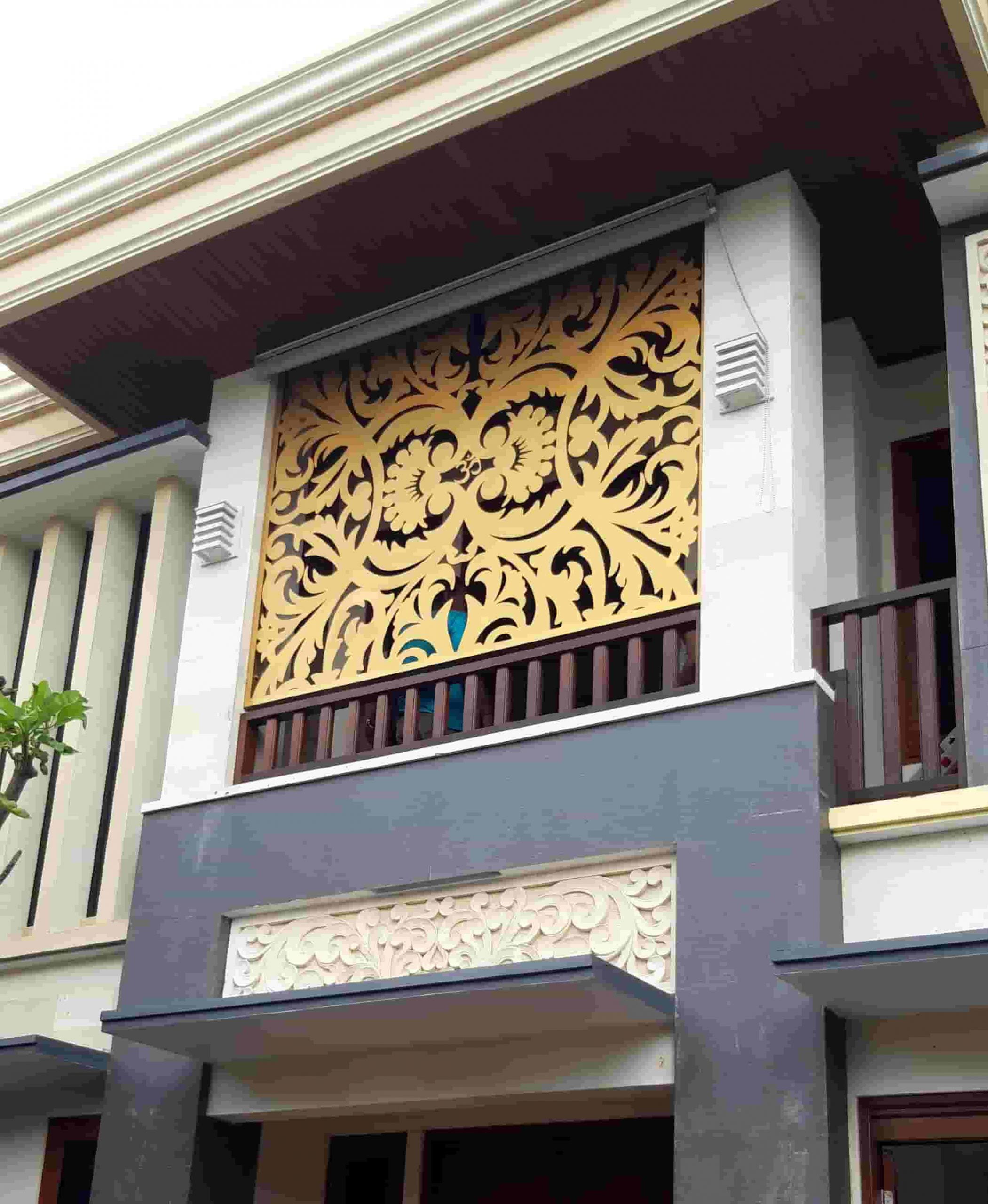
Laser-cut facades in 2026 focus on both aesthetics and function. Panels are no longer only decorative; they filter light, improve privacy, and strengthen building identity.
For tropical homes, patterns that are too dense can make spaces feel hotter. Facade design should consider sun direction, airflow, and long-term maintenance.
Cleaner Patterns That Age Well
The safest 2026 direction is clean geometry, vertical lines, and simplified natural motifs. These styles pair well with stone, concrete, glass, wood, and neutral paint colors.
- Large geometric patterns
- Simplified leaf motifs
- Layered panels for visual depth
- Black, bronze, or earth-tone finishes
When Should A Facade Be Custom-Made?
A custom facade is useful when the surface size is not standard, the building faces harsh afternoon sun, or the owner wants a motif that becomes a visual signature.
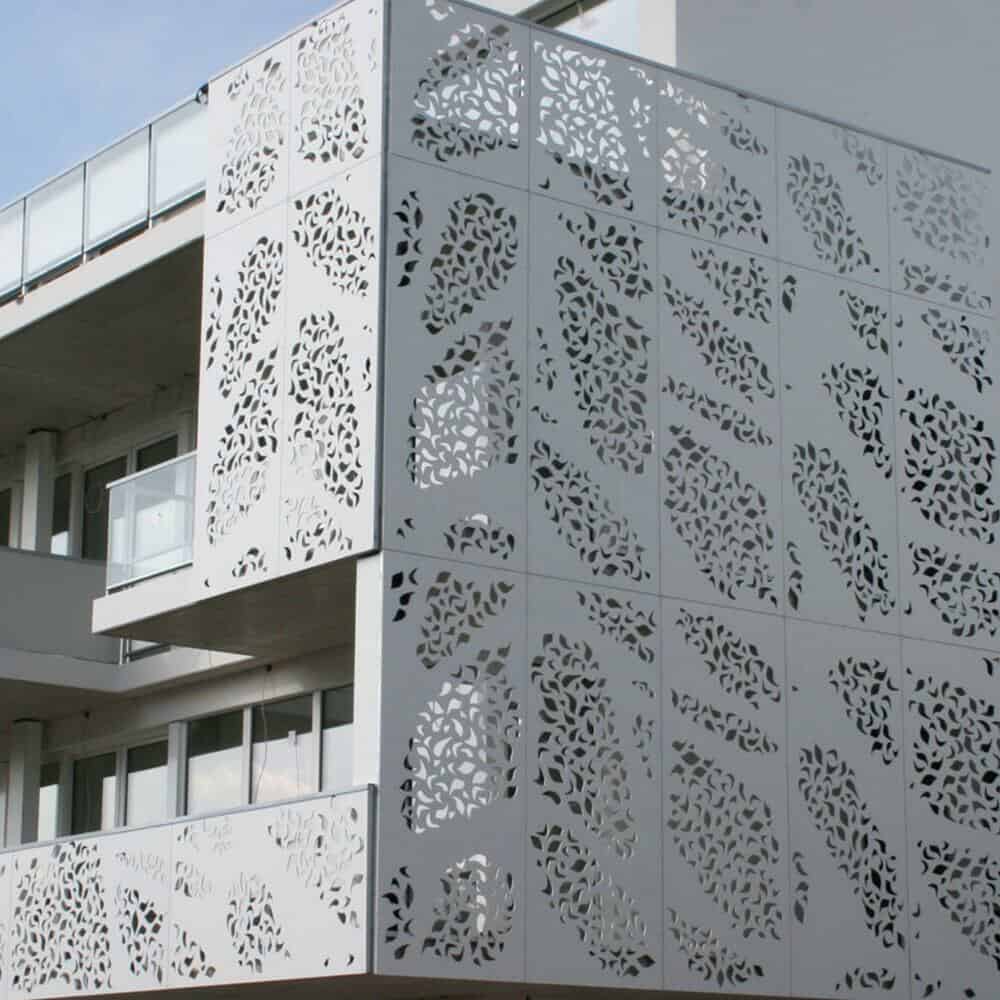
A good laser-cut facade should look beautiful from a distance, clean up close, and remain comfortable in daily use.
Facades As Filters, Not Just Building Skins
In tropical buildings, a laser-cut facade should be understood as a filter. It controls sunlight, reduces direct views from outside, creates shade, and still allows air movement. If it is treated only as decoration, the panel may look attractive but fail to improve the comfort of the space behind it.
Good design begins with practical questions. Which side receives the strongest sun? Is the room behind the facade a bedroom, living room, corridor, or service area? Do the occupants still want to see outside? Is the street or neighboring building too close? These answers determine the pattern density and panel position.
Large Patterns Are Easier To Read From The Street
Facades are usually viewed from several meters away, sometimes much farther. Very small patterns often disappear from a distance and only become visible when someone stands close. For homes and villas, larger patterns with a clear rhythm are usually more effective. Vertical lines, geometric fields, and simplified leaf motifs can create character without making the building feel crowded.
Small patterns can still work in selected areas, such as near the entrance or on a balcony seen up close. For the main facade field, however, the motif scale should follow the building size. The larger the field and the farther the viewing distance, the more important clean pattern reading becomes.
Layering Adds Visual Depth
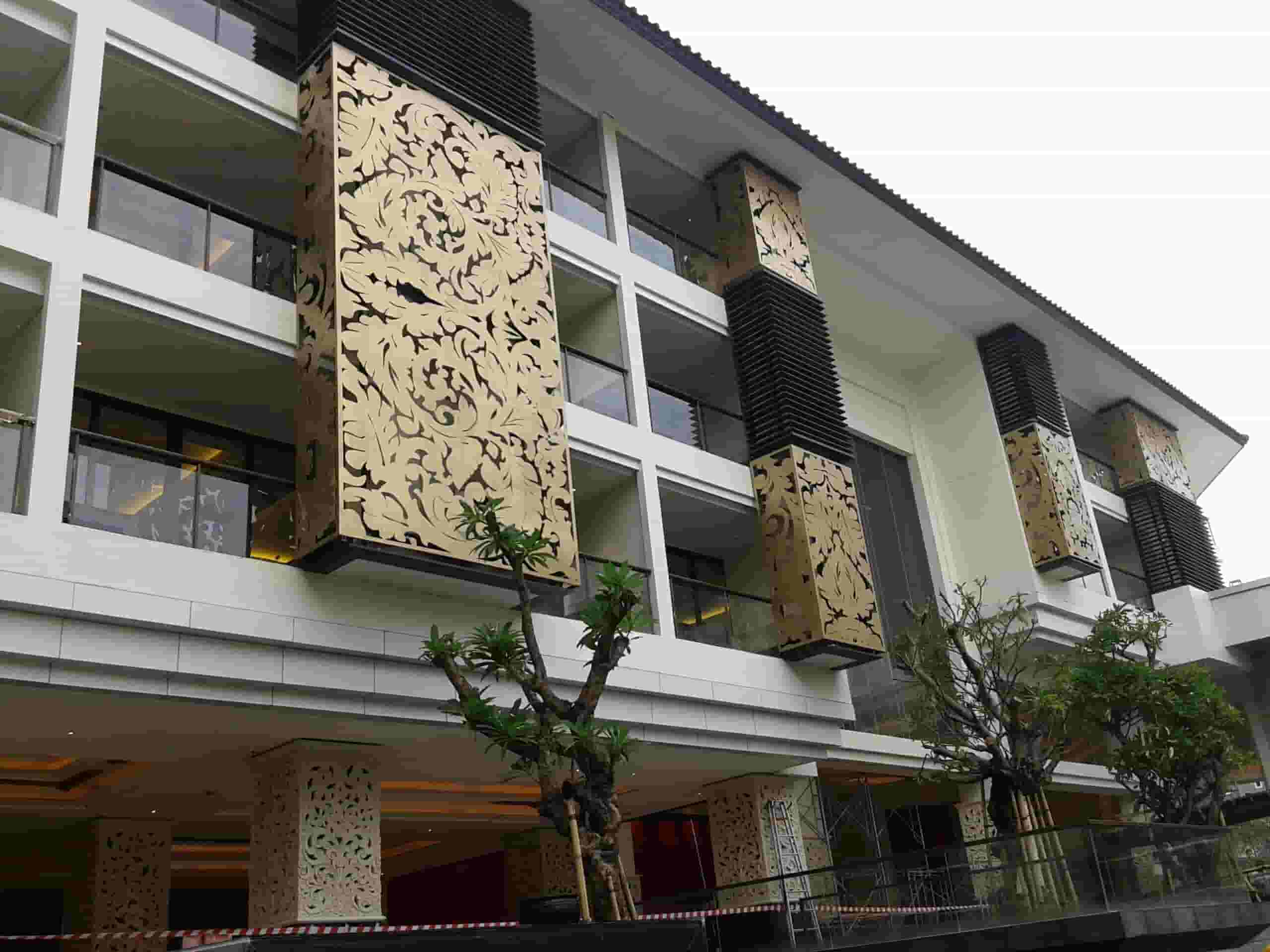
One strong 2026 direction is layering, which means creating several visual layers between inside and outside. Laser-cut panels can sit in front of glass, walls, planting, or solid surfaces. As light changes, these layers create shadow and depth so the facade does not feel flat.
Layering also supports function. Panels can reduce direct heat on glass, give privacy to balconies, or hide service areas without closing them completely. The distance between layers should still allow cleaning. If a panel sits too close to a wall, dust and leaves can become hard to reach.
Facade Colors That Age Well
Facade color should be chosen carefully because it becomes the face of the building. Matte black, bronze, dark grey, and earth tones remain strong for 2026 because they pair well with tropical materials such as stone, timber, concrete, and plants. Neutral colors also age better when trends change.
Commercial buildings can use bolder colors if they match the brand identity. For homes and villas, colors that are too specific may feel tiring over time. If a strong accent is desired, use it on a selected area rather than across the entire facade. This keeps the building expressive without losing elegance.
Maintenance Should Be Designed From The Start
Facades are often placed high on the building, so maintenance should be considered early. Dense motifs and small details can hold dust and become difficult to clean. Very large panels without service access can also become a problem if repair is needed. The design should include how the panel will be cleaned, how joints will be checked, and how the finish can be touched up if necessary.
For buildings near trees, dusty roads, or the coast, maintenance becomes even more important. A good outdoor finish helps, but it does not remove the need for care. Regular cleaning keeps the facade presentable and prevents small problems from becoming larger repairs.
Custom Motifs For Building Identity
A custom facade gives a building a more recognizable character. The motif can be inspired by the site, villa name, surrounding nature, or owner identity. For hospitality businesses, a custom motif can help guests remember the property. For homes, it adds a personal touch without changing the main structure.
Custom design still needs discipline. Motifs that are too literal or too complex can age quickly. A good design usually takes the core idea and simplifies it into a clean pattern. This keeps the facade unique without making it excessive.
Conclusion For 2026 Facade Trends
Laser-cut facade trends in 2026 are moving toward designs that are more functional, clean, and durable. Panels are no longer only decorative. They are part of a strategy for sunlight, privacy, airflow, and building identity. Homes, villas, and commercial buildings look more mature when the facade responds to real site conditions, not only reference images.
Before choosing a motif, review sun direction, viewing distance, room needs, surrounding materials, and maintenance access. From there, pattern, color, thickness, and installation system can be selected more accurately. A successful facade looks strong from the street, feels comfortable from inside, and remains relevant long after trends move on.